What Are Homogeneous Tiles?
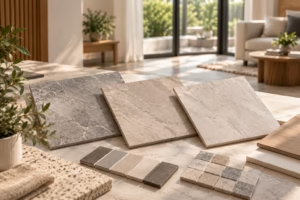
Homogeneous tiles are tiles where the colour, composition and pattern run through the full thickness of the tile instead of sitting only on the surface. This full-body construction gives the tile a consistent appearance throughout its body.
They are made from refined clays and minerals and fired at high temperatures, producing a dense body with low water absorption. Plain-language definitions sit in the tilepedia glossary, and the wider family is covered in the complete guide to the types of floor tiles.
Homogeneous vs Glazed Tiles: What Is the Difference?
The main difference is where the colour sits. On a glazed tile, the colour and design sit in a glaze layer on the surface, while the body beneath is often a different colour.On a homogeneous tile, the colour and composition extend through the body, giving the surface a more consistent appearance if wear occurs.
| Feature | Homogeneous (full-body) | Glazed tiles |
| Colour and pattern | Run through the body | Sit in a surface glaze |
| Wear appearance | Surface wear may be less noticeable because the body has a similar colour | May expose the body if the glaze wears |
| Design range | Solid tones, salt-and-pepper, subtle patterns | Wide, including wood and marble looks |
| Common wear measure | Deep abrasion resistance | PEI rating |
| Commonly used on | High-traffic and commercial floors | Residential floors and walls |
One point specifiers often note is the wear measure: glazed tiles use the PEI abrasion class, while unglazed homogeneous tiles are assessed by deep abrasion resistance instead.
How Do Homogeneous, Porcelain, and Ceramic Relate?
Homogeneous tiles are a type of porcelain tile with colour and composition running through the body. Porcelain is the broader category, which also includes glazed porcelain.
Ceramic tiles are another tile category and are commonly used for walls and lighter-use applications. The right choice depends on the product specifications and intended application.
The full comparison is in the porcelain vs ceramic guide, and the selection process for porcelain is in the guide to choosing porcelain tiles.
What Types of Homogeneous Tiles Are There?
Homogeneous tiles are made in a few forms, and the form affects both the look and the depth of the wearing surface.
| Type | How it is made | Commonly considered for |
| Full-body | Colour and pattern run through the whole tile | Heavy or continuous traffic |
| Double-charge (double-loading) | Two powder layers pressed into a thick design layer over a base | commercial floors requiring a deeper design layer |
| Soluble salt (single-charge) | A thinner colour layer applied and then polished | Lighter-traffic and budget-conscious project |
The form is matched to the traffic and the budget. The choice depends on the expected traffic, design requirements and product specifications. A deeper design layer may be considered for areas with higher wear demands.
Why Are Homogeneous Tiles Used for High-Traffic and Commercial Floors?
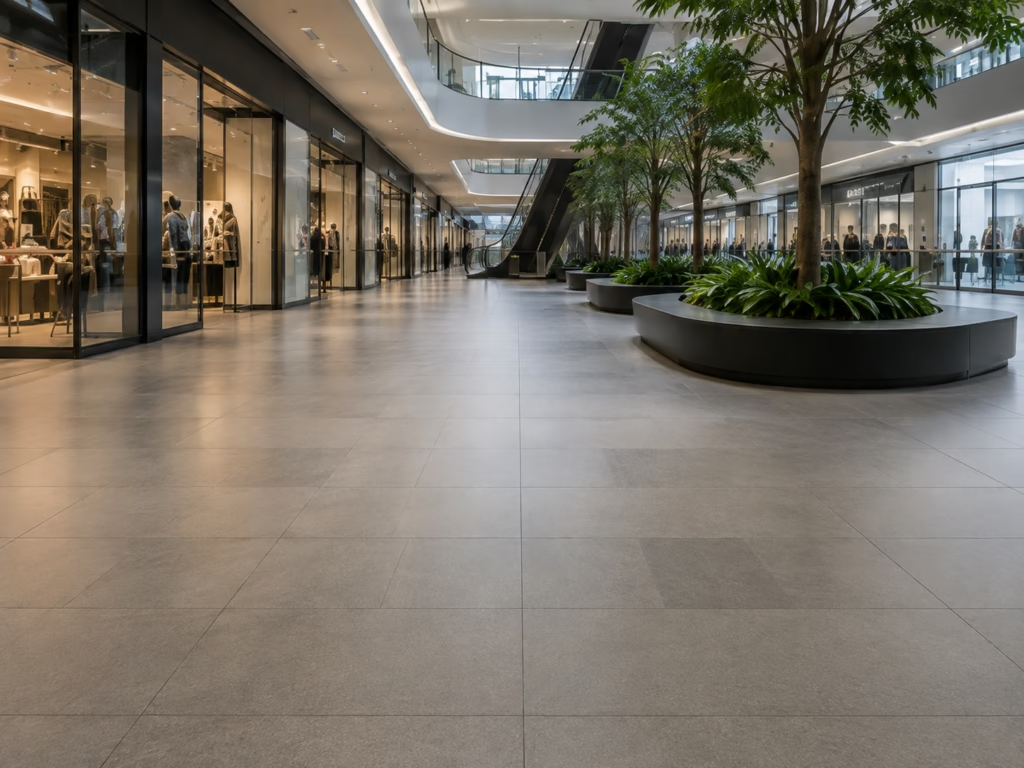
Commercial and public floors face conditions most homes never see: heavy footfall, wheeled loads, abrasive grit tracked in on shoes, and frequent, sometimes aggressive, cleaning. In Malaysia, that describes shopping malls, airports and transport hubs, offices, showrooms, hospitals, schools, and back-of-house areas. Homogeneous tiles suit these settings for a few clear reasons:
- Through-body colour means surface wear and minor chips tend to stay hidden.
- The dense body has low water absorption, which helps in wet and heavily cleaned areas.
- Deep abrasion resistance relates to how the surface holds up under traffic and grit.
- Breaking strength relates to how the tile copes with loads and heavy use.
These characteristics may make homogeneous tiles suitable for demanding environments, but the right product depends on the specific project requirements. Homogeneous tiles also work well in busier Malaysian homes, and a room-by-room view sits in the guide to the best tile types for each room in Malaysia.
Which Specifications Should You Check?
For a commercial or high-traffic floor, several specifications are best read together rather than relying on one figure.
| Specification | What it indicates | Common reference |
| Water absorption | Density and moisture uptake of the body | ISO 10545-3; porcelain classification is generally associated with ≤0.5% water absorption |
| Deep abrasion resistance | Wear resistance of an unglazed surface | ISO 10545-6 (volume loss; lower is better) |
| Breaking strength | Resistance to breaking under load | ISO 10545-4 |
| Slip resistance | Grip on the surface, especially when wet | R-rating or Wet Pendulum P-rating |
| Chemical and stain resistance | Resistance to chemicals and staining | ISO 10545-13 and 10545-14 |
Slip resistance often gets particular attention on commercial floors, since footwear, spills, and cleaning routines all affect grip. The rating is matched to the area and its conditions, and there is more in the anti-slip tile ratings guide.
Finishes, Cleaning, and Installation
1- Finishes:
Homogeneous tiles are available in different finishes, including natural, polished and textured surfaces. Natural or matte finishes are commonly considered for general floor applications, while polished finishes are often selected for areas where a brighter appearance is preferred. Textured finishes may be considered for areas where additional traction is required.
For wet areas, always check the product’s slip resistance rating rather than relying on the finish alone.
2- Cleaning:
Polished surfaces may show watermarks and surface marks more easily. Cleaning requirements can vary by product, so use the manufacturer’s recommended cleaning method.
3- Installation:
Large-format tiles require suitable substrate preparation, adhesive selection and installation methods. The manufacturer’s installation guidance and site conditions should be considered before installation.
The rectified tiles guide covers the tight-joint look that large homogeneous formats often use, and project documents and certificates sit on the Kimgres certifications page.
A Quick Checklist for Specifying Homogeneous Tiles
- Confirm the tile is homogeneous or full-body, so the colour runs through the body
- Choose the type (full-body, double-charge, or soluble salt) to match the traffic and budget
- Check the product’s water absorption specification and confirm that it meets the requirements for the intended application.
- Review deep abrasion resistance for the expected traffic level
- Review breaking strength for loads and heavy use
- Confirm the slip resistance rating, matched to the area and its conditions
- Match the finish to the floor, with textured or anti-slip finishes for wet areas
- Review large-format and installation needs with the installer
- Confirm the intended use and supporting documents on the product data sheet
Frequently Asked Questions About Homogeneous Tiles
What are homogeneous tiles in simple terms?
Homogeneous tiles are full-body porcelain tiles where the colour and composition extend through the tile. They are a dense, fully vitrified porcelain, commonly used for high-traffic and commercial floors.
Are homogeneous tiles the same as porcelain tiles?
Homogeneous tiles are a type of porcelain tile. The key difference is that homogeneous tiles have colour and composition running through the body, while porcelain can also have a separate glazed surface.
What is the difference between full-body and double-charge homogeneous tiles?
Full-body tiles carry the colour and pattern through the entire body, giving the most consistent colour. Double-charge tiles have a thicker pressed design layer over a base body, giving a deep wearing layer. The suitable option depends on the project’s traffic, design and technical requirements.
Do homogeneous tiles have a PEI rating?
The PEI rating applies mainly to glazed tiles. Unglazed homogeneous tiles are assessed by deep abrasion resistance instead, measured as volume loss. Check the product data sheet for the relevant specification.
Can homogeneous tiles be used in Malaysian homes?
Yes. Homogeneous tiles can be considered for residential areas with higher traffic, such as living rooms, dining areas and other busy spaces. The finish and technical specifications should match the intended application.
Conclusion
Homogeneous tiles are a practical option for many high-traffic and commercial flooring applications. Their full-body construction, available finishes and technical specifications make them suitable for a range of project requirements. Before selecting a product, compare its technical data with the expected traffic, environment and installation conditions.
Explore Kimgres’ homogeneous tile options and product data, or contact our team to discuss suitable options for your project.
Note: Tile suitability, durability, and slip resistance may vary depending on project conditions, installation methods, safety regulations, and local standards. Final selection should be confirmed with your project consultant or relevant professional.