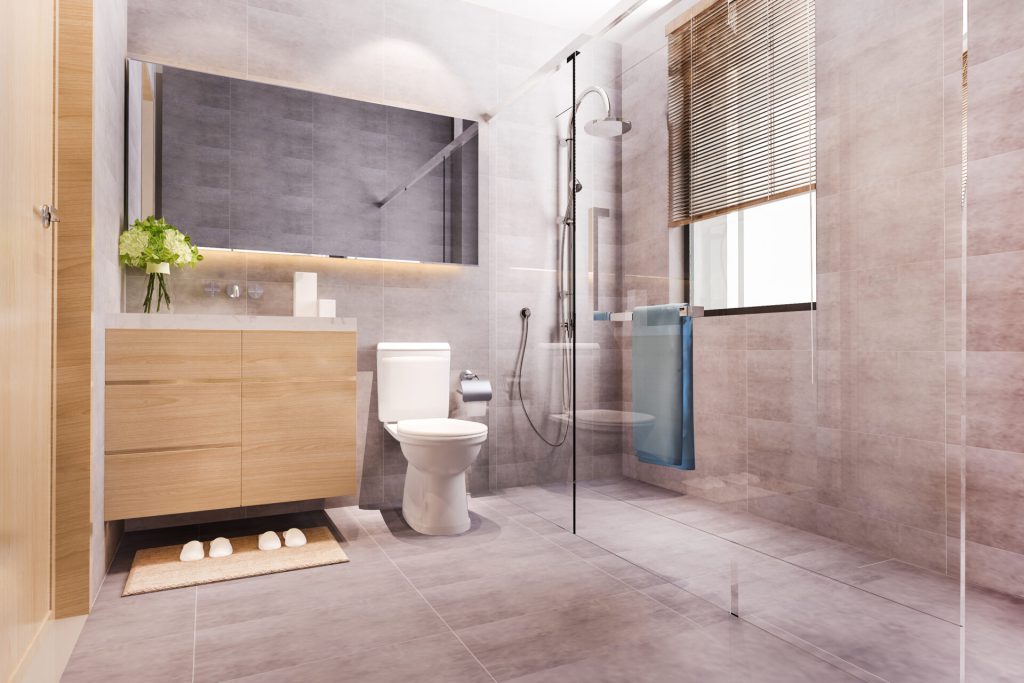
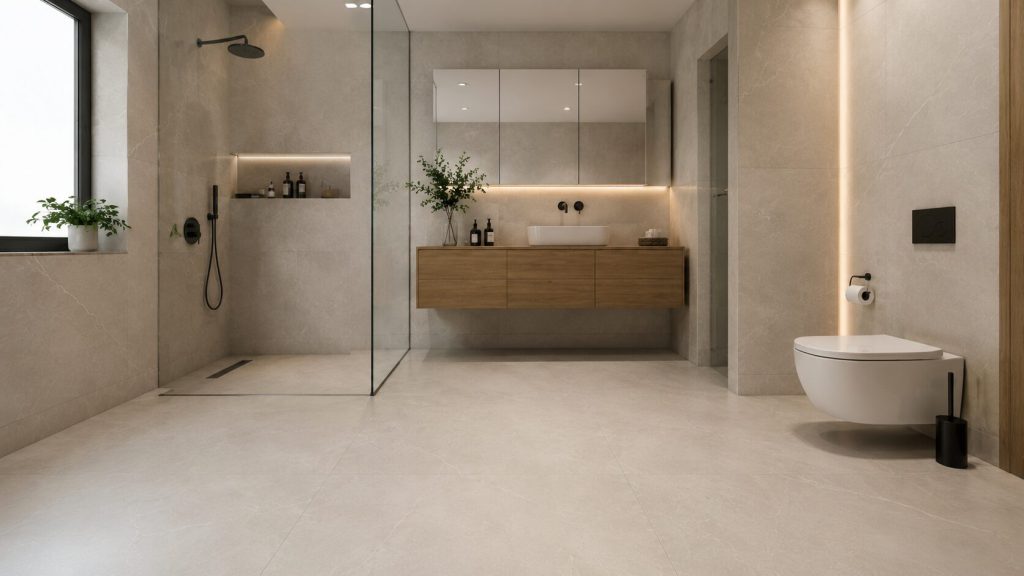
Bathrooms involve water, soap, cleaning products, and often barefoot traffic, so bathroom tiles are commonly reviewed for more than appearance. Bathroom floor tiles and bathroom wall tiles may have different considerations: floors are commonly reviewed for slip resistance and wet-area suitability, while walls may focus more on design. Porcelain tiles are commonly considered for bathroom floors due to lower water absorption, while ceramic tiles are often used for walls. Surface finish, tile size, grout, and waterproofing are generally reviewed together. Final selection would depend on the product, finish, and project conditions.
What Makes Bathroom Tiles Different?
Bathrooms are among the most important spaces to consider carefully because they often involve water, soap, shampoo, cleaning products, and barefoot traffic. Surfaces may stay wet or damp for extended periods, and the space combines floors, walls, and sometimes shower or wet zones that each face different conditions.
Because of this, bathroom tiles are commonly reviewed for wet-area suitability, surface finish, slip resistance, and ease of cleaning, alongside the design. Matching the tile to the specific surface, whether floor or wall and wet zone or dry zone, generally leads to a more practical result. For an overview of choosing tiles by area, see the guide on choosing tiles by space.
Bathroom Floor Tiles vs Bathroom Wall Tiles
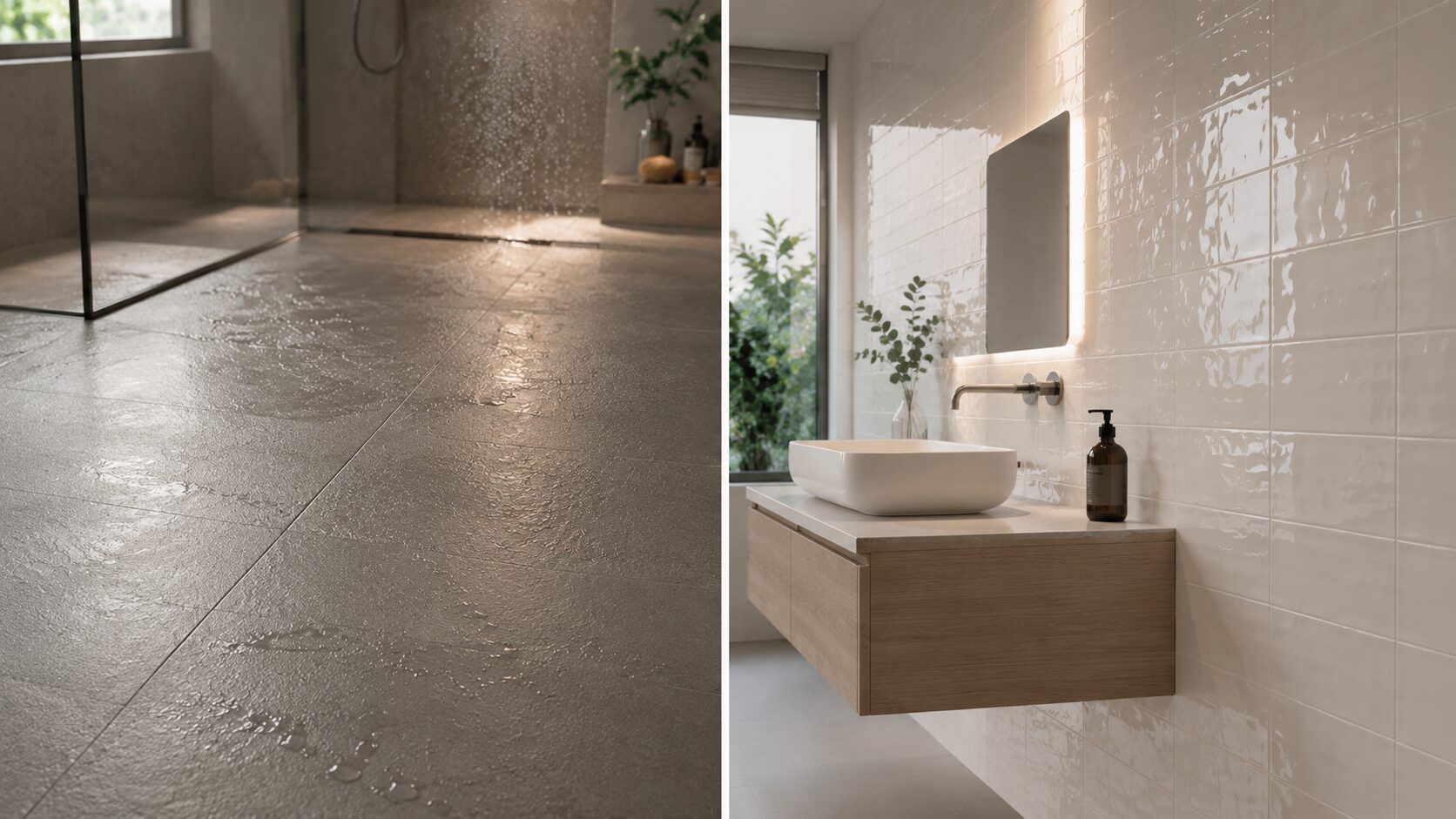
Bathroom floors and walls face different conditions, so they are commonly reviewed separately.
For bathroom floor tiles, porcelain is commonly considered because it typically has lower water absorption and a denser body. Surface finish and slip resistance are also commonly reviewed, since floors may become wet during use. A matte, structured, or textured finish may be considered for wet floors.
For bathroom wall tiles, both ceramic and porcelain may be suitable depending on the design, budget, and maintenance expectations. Ceramic wall tiles are often selected for their design variety, while porcelain may be chosen where a more durable or premium finish is the priority. Because walls are not walked on, slip resistance is generally less of a factor for walls than for floors.
Porcelain vs Ceramic for Bathrooms
Porcelain and ceramic tiles come from the same broad family, but they are commonly used differently in bathrooms. Porcelain is generally denser with lower water absorption, which is why it is commonly considered for bathroom floors and wet zones. Ceramic is widely used for walls and selected areas, offering design variety and practicality.
This does not mean ceramic is unsuitable for bathrooms, as it is widely used, particularly on walls. The choice would generally depend on the surface (floor or wall), the level of water exposure, the finish, and the product. For a full material comparison, see the porcelain vs ceramic tiles guide. For background, see the guides on understanding ceramic tiles and porcelain tiles explained.
Surface Finishes and Slip Resistance
Surface finish affects both appearance and function in a bathroom. Glossy finishes reflect light and may create the visual impression of a brighter space, and they are commonly used on walls. For floors, especially wet floors, glossy finishes are generally reviewed more carefully, because smoother surfaces may provide lower wet-area traction under certain conditions.
Matte, structured, or textured finishes are more commonly considered for bathroom floors and wet zones because they may offer more grip. Where slip resistance is a priority, wet slip resistance references such as Pendulum P-ratings are commonly reviewed, and it may help to request the relevant test information for the specific product and finish. For more detail, see the anti-slip tile ratings guide. For moisture-prone areas, the Land Series is one range that may be reviewed.
Tile Size and Layout in Bathrooms
Tile size and layout may influence how a bathroom looks and feels. Larger tiles may create a cleaner, more continuous look with fewer joints, while smaller tiles and mosaics are commonly used for shower floors and feature areas, partly because more joints may assist with surface traction and accommodate following floor falls toward drains. For compact bathrooms, the guide on tile layouts for small spaces may help.
Layout is commonly planned around the drainage points, the slope of the floor, and the position of fittings. For tile sizes and edge profiles, see the guide on tile features and sizes. For minimal-joint, large-format looks, see the rectified tiles guide.
Grout and Waterproofing Considerations
Grout and waterproofing are commonly reviewed alongside the tile in a bathroom. Waterproofing performance should not be assumed to come from the tiles, grout, or adhesive alone and is generally addressed through separate waterproofing systems as part of the overall bathroom design.
For grout, stain resistance and cleanability are commonly considered. Cementitious grout is widely used and may benefit from sealing in wet areas, where increased stain resistance and water-exposure resistance are priorities. For grout types, colours and sealing, see the tile grout guide, and for general upkeep, the guide on tile care and maintenance.
Toilet, Wet, and Dry Zone Considerations
Many Malaysian bathrooms separate wet and dry zones, or combine the toilet and shower in one space. Toilet floor tiles and shower areas may face more frequent water exposure, so slip resistance and wet-area suitability are commonly reviewed for these zones. Dry zones may allow a wider range of finishes since they are less frequently wet.
Where the bathroom includes a shower or continuous wet area, the floor finish, drainage, and slope are generally part of the design. Reviewing each zone separately, rather than applying one tile choice to the whole bathroom, may lead to a more suitable result.
What to Check Before Buying Bathroom Tiles
- Confirm whether the tile is intended for floor use, wall use, or both, on the product data sheet.
- Review the surface finish and any relevant slip resistance information for wet floors.
- Consider porcelain for floors and wet zones, while ceramic is commonly used for walls.
- Plan tile size and layout around drainage, slope, and fittings.
- Review grout selection and confirm waterproofing is handled separately.
- Request supporting documents where relevant; refer to the Kimgres certifications page.
Frequently Asked Questions About Bathroom Tiles
What tiles are commonly used for bathroom floors?
Porcelain tiles are commonly considered for bathroom floors because they usually have lower water absorption and a denser body. A matte, structured, or textured finish may be considered for wet floors, and slip resistance is commonly reviewed.
Can ceramic tiles be used in bathrooms?
Yes, ceramic tiles are widely used in bathrooms, particularly on walls, where they offer design variety. For floors and wet zones, porcelain is commonly considered, though suitability would depend on the product and finish.
Are glossy tiles suitable for bathroom floors?
Glossy finishes are commonly used on walls, but for wet floors they are generally reviewed more carefully because smoother surfaces may be more slippery when wet. Matte or textured finishes are more commonly considered for bathroom floors.
What size tiles suit a small bathroom?
There is no single rule. Larger tiles may create a cleaner look with fewer joints, while smaller tiles and mosaics are commonly used for shower floors and feature areas. The choice would depend on the layout, drainage, and design preference.
What slip resistance is suitable for bathroom tiles?
As a general reference, there is no single slip-resistance rating that is suitable for every bathroom. Suitability would depend on the specific area, user profile, project requirements, and applicable standards. See the anti-slip tile ratings guide for detail.
Conclusion
Bathroom tile selection is generally about matching the tile to the surface and the conditions. Bathroom floor tiles are commonly reviewed for slip resistance and wet-area suitability, with porcelain commonly considered, while bathroom wall tiles may focus more on design, with ceramic widely used. Surface finish, tile size, grout, and waterproofing are generally reviewed together.
Reviewing wet and dry zones separately, and confirming the product data and finish for each surface, may lead to a more practical and suitable tile selection. To explore bathroom tile options, browse the Kimgres product page or contact Kimgres for samples and product data.
Note: Slip resistance and tile suitability may vary depending on project conditions, safety regulations, and local standards. Final selection should be confirmed with your project consultant or relevant professional.