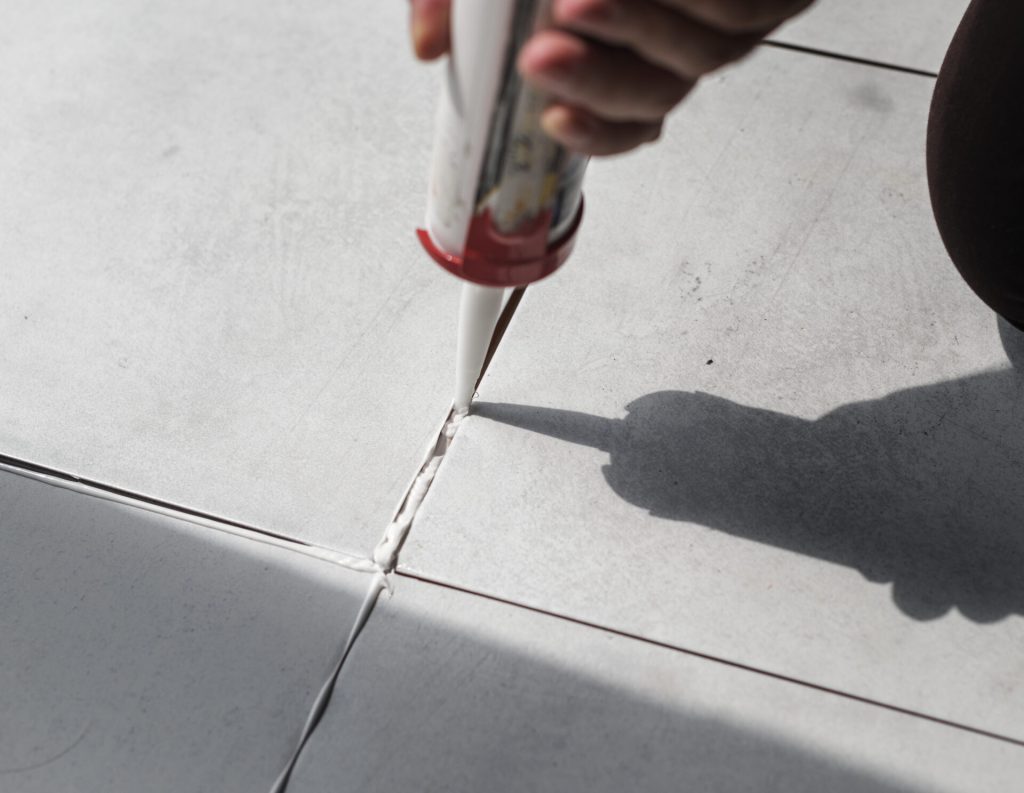
Grout fills the joints between tiles and plays a part in both appearance and long-term maintenance. The two most commonly referenced families are cementitious grout (sanded and unsanded) and epoxy grout, each with different practical trade-offs. Joint width, grout colour, and sealing are commonly reviewed alongside the tile type and the space, and bathrooms, kitchens, and outdoor areas may each have different considerations. Grout choice would generally depend on the tile, the joint width, the exposure to water and cleaning, and the manufacturer’s guidance.
Why Does Grout Matter in Tile Installation?
Grout is the material used to fill the joints between tiles. Although it often receives less attention than the tile itself, grout may influence how a finished surface looks, how easy it is to clean, and how it behaves over time in wet or high-traffic areas.
In Malaysia, where bathrooms, kitchens, balconies, and outdoor areas are regularly exposed to water, humidity, and frequent cleaning, grout selection is commonly reviewed together with the tile, the joint width, and the maintenance routine. A suitable grout, correctly installed, may help support a neater finish and long-term maintainability efforts. For general fitting practices, see the Kimgres tile installation guide.
What Are the Common Types of Tile Grout?
Grout products vary by brand and formulation, but they are commonly grouped into two broad families. The table below offers a general comparison, and the actual properties would depend on the specific product and manufacturer.
| Grout Type | General Characteristics | Commonly Considered For |
| Cementitious (unsanded) | Cement-based; smoother texture; commonly used for narrow joints and wall tiles | Narrow joints, wall tiles, polished or scratch-sensitive surfaces |
| Cementitious (sanded) | Cement-based with added sand; more body for wider joints | Wider joints, floor tiles, many general applications |
| Epoxy | Resin-based; generally denser and more resistant to staining and chemicals; may cost more and require careful application | Wet zones, commercial kitchens, areas with chemical or stain exposure |
Some manufacturers also offer modified or specialty grouts. Where performance in a demanding area is a priority, it may help to review the specific product data sheet and the manufacturer’s guidance before selection.
Cementitious Grout: Sanded vs Unsanded
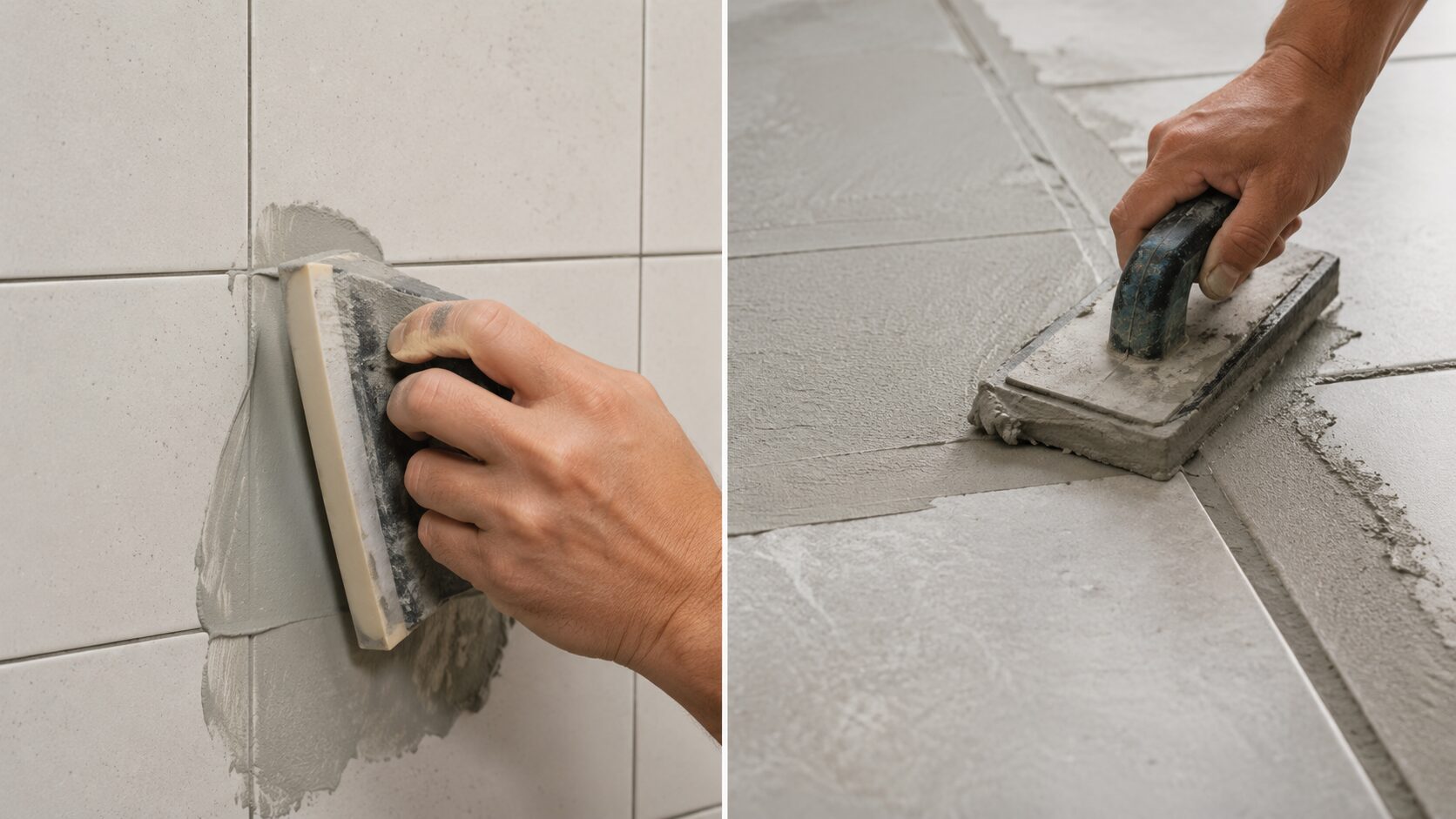
Cementitious grout is widely used across residential and commercial projects. It is commonly available in two forms:
- Unsanded grout has a smoother texture and is often considered for narrower joints and for delicate or polished tile surfaces where sand could risk scratching.
- Sanded grout contains fine sand for added body and is commonly used for wider joints and floor applications.
Cementitious grout is generally more economical and easier to work with than epoxy, which is part of why it is so common. It is more porous, may be more susceptible to staining and moisture penetration over time, which is why sealing and maintenance are commonly discussed for cement-based grout in wet areas. The choice between sanded and unsanded would typically follow the joint width and the tile surface.
Epoxy Grout: When Is It Commonly Considered?
Epoxy grout is resin-based and is generally offers greater resistance to staining, water exposure, and many chemicals than standard cementitious grout. Because of these properties, it is commonly considered for wet zones, commercial kitchens, laboratories, and areas exposed to cleaning chemicals or staining substances.
The trade-offs commonly noted are that epoxy grout may cost more, may set more quickly, and often requires careful application by an experienced installer. For some projects these trade-offs may be worthwhile, while for others a quality cementitious grout with appropriate sealing may be sufficient. The decision would generally depend on the exposure conditions, the budget, and the installer’s experience.
How Wide Should Grout Joints Be?
Grout joint width is commonly influenced by the tile type, the tile size, whether the tile is rectified, and the look you want to achieve. As a general guide:
- Non-rectified (cushion-edged) tiles are commonly laid with slightly wider joints to accommodate natural edge variation.
- Larger floor tiles and outdoor areas may use joint widths that suit the product and the installation conditions.
There is no single “correct” width for every project. The appropriate joint would generally follow the manufacturer’s guidance, the applicable installation standards, and the practical needs of the space. For more on edge profiles and how they relate to joints, see the guide on tile features and edge profiles. For minimal-joint layouts and large formats, see the rectified tiles guide.
Choosing a Grout Colour
Grout colour may have a noticeable effect on the final appearance of a tiled surface. Two broad approaches are commonly used:
- Matching grout (close to the tile colour) may create a more visually continuous appearance and may reduce the visual prominence of joints.
- Contrasting grout (lighter or darker than the tile) may highlight the tile pattern, the layout, or a feature design.
Practical points are also commonly considered. Very light grout in high-traffic or wet areas may show staining more easily over time, while darker grout may help disguise it. Because appearance and maintenance both play a role, it may help to view grout colour samples alongside the actual tile before deciding. For tile colour direction, you may also read the 2026 tile colour palettes guide.
Grout in Bathrooms, Kitchens, and Outdoor Areas
Bathrooms
Bathrooms involve regular water, soap, and cleaning products. Grout in these areas is commonly reviewed for water exposure and ease of cleaning, and waterproofing performance should not be assumed to come from the grout alone and is generally addressed through separate waterproofing systems. For bathroom surfaces, see the bathroom tiles guide, and for choosing tiles by area, the guide on choosing tiles by space.
Kitchens
Kitchen floors and backsplashes may be exposed to spills, oil, and frequent cleaning. Stain resistance and cleanability are commonly considered here, which is one reason epoxy grout is sometimes reviewed for backsplashes and wet kitchens. For more on kitchen surfaces, see the kitchen tiles guide.
Outdoor areas
Outdoor grout may be exposed to weather, moisture, UV exposure, and temperature variation. Suitable products for external conditions are commonly used, and drainage and movement joints are generally reviewed as part of the installation. For outdoor areas, see the outdoor tiles guide, and for wet-area surfaces and slip resistance, the anti-slip tile ratings guide.
Grout Sealing, Cleaning, and Maintenance
Maintenance needs may vary by grout type. Cementitious grout is more porous and may benefit from sealing in wet or staining-prone areas, with resealing over time depending on the product and the conditions. Epoxy grout is generally denser and often does not require the same sealing, though it would still benefit from regular cleaning.
General maintenance points commonly include:
- Cleaning spills promptly, particularly on light-coloured grout.
- Using cleaning products that are compatible with the grout and tile surface, and avoiding harsh methods that could damage them.
- Following the manufacturer’s guidance on sealing and resealing where relevant.
- Checking joints periodically and addressing any cracked or missing grout.
For general upkeep, see the Kimgres guide on tile care and maintenance.
Common Grout Problems and How They May Be Reduced
Several grout-related issues may occur, and certain measures may help reduce the likelihood of them:
- Staining or discolouration may be reduced through suitable grout selection, sealing where relevant, and prompt cleaning.
- Cracking may be linked to substrate movement, missing movement joints, or installation factors, and is generally reviewed during installation.
- Efflorescence (a powdery deposit) may appear in some conditions and is commonly addressed according to the product guidance.
- Uneven colour may relate to mixing, curing, or cleaning practices during installation.
Because many of these factors relate to installation, working with an experienced installer and following the product guidance may help support a more durable result. For solid installation practices, see the guide on solid tile installation.
Frequently Asked Questions About Tile Grout
What is the difference between sanded and unsanded grout?
Unsanded grout has a smoother texture and is commonly considered for narrow joints and delicate surfaces, while sanded grout contains fine sand for added body and is often used for wider joints and floors. The suitable option would generally follow the joint width and the tile surface.
Is epoxy grout better than cementitious grout?
Epoxy grout is generally denser and more resistant to staining and chemicals, which is why it is commonly considered for wet zones and commercial kitchens. However, it may cost more and often requires careful application. A quality cementitious grout with appropriate sealing may be sufficient for many residential areas, so the more suitable choice would depend on the project.
Should grout be sealed?
Cementitious grout is more porous and may benefit from sealing in wet or staining-prone areas, with resealing over time depending on the product and conditions. Epoxy grout is generally denser and often does not require the same sealing. Manufacturer guidance would typically be followed.
What grout colour is easiest to maintain?
Mid-tone or darker grout may show staining less than very light grout in high-traffic or wet areas. Appearance and maintenance both play a role, so viewing samples with the actual tile may help.
Can rectified tiles be installed without grout?
A minimum grout joint is still commonly advised even for a near-seamless look, as a small joint may help accommodate tolerances and movement. The exact width would generally follow the product and installation guidance.
Note: Grout performance and maintenance may vary depending on the product, installation method, and usage conditions. Final selection should be confirmed with the grout manufacturer, installer, or relevant professional.
Conclusion
Grout may be a small part of a tiled surface, but it plays a part in appearance and long-term maintenance. Cementitious grout is widely used and economical, while epoxy grout is commonly considered where stain and chemical resistance are a priority. Joint width, grout colour, and sealing are generally reviewed alongside the tile and the conditions of the space.
As a practical approach, it may help to match the grout type to the area, choose a colour that balances appearance with maintenance, and follow the manufacturer’s and installer’s guidance. To discuss tiles and suitable finishes for your project, browse the Kimgres product page or contact Kimgres.
Note: This article is a general guide. Grout and tile suitability may vary depending on project conditions, installation methods, and local standards. Final selection should be confirmed with your installer or relevant professional.