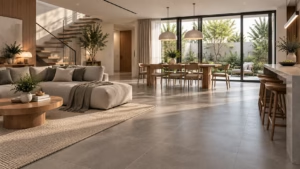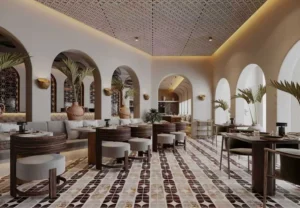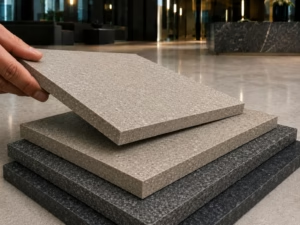
A PEI rating is a durability scale that shows how well a glazed tile’s surface may resist abrasion from foot traffic. It runs from Class 0 to Class 5, where lower numbers generally suit walls and light use, and higher numbers are commonly considered fit for busy floors. It is useful, but only one of several specifications worth checking before you choose a tile.
What Is a PEI Rating?
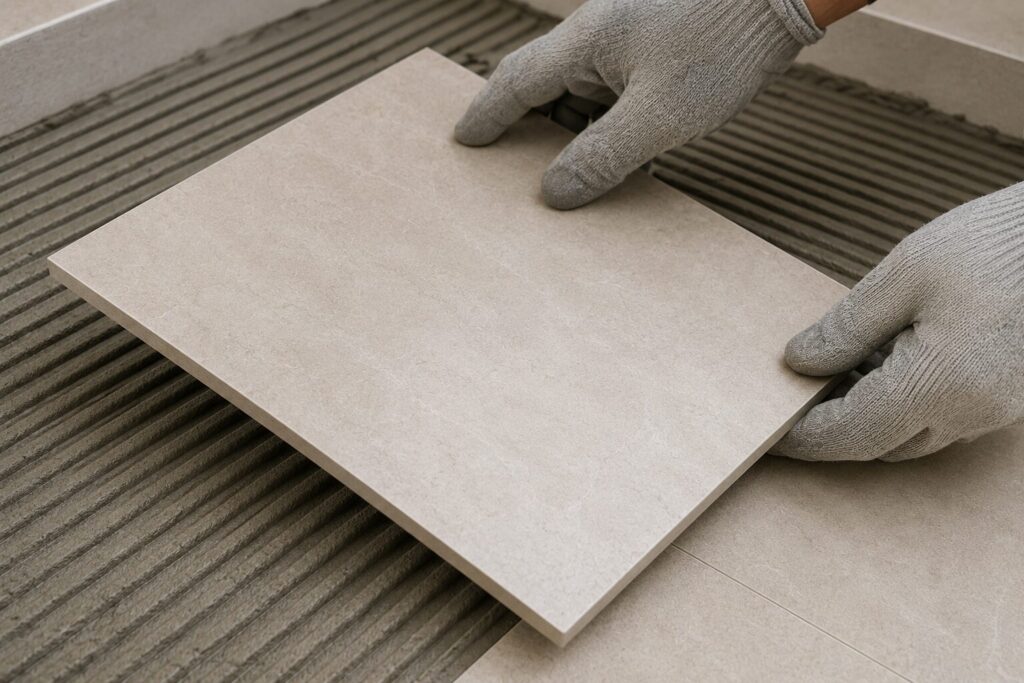
A PEI (Porcelain Enamel Institute) Rating measures the abrasion resistance of the glazed surface on ceramic and porcelain tiles.
It helps indicate the level of foot traffic a glazed tile is generally designed to withstand under normal conditions.
Rather than measuring the overall strength of a tile, the PEI rating specifically evaluates surface wear resistance caused by repeated pedestrian traffic.
It is commonly used by architects, designers, developers, contractors and homeowners as one of several references when selecting tiles.
Important Notes(!): PEI ratings apply primarily to glazed tile. Unglazed homogeneous porcelain tiles are typically evaluated using different performance standards.
A PEI Rating does not indicates:
- Slip resistance
- Water absorption
- Impact Resistance
- Breaking strength
- Chemical resistance
- Installation quality
- Overall product quality
A higher PEI rating does not necessarily mean one tile is “better” than another, it simply means it is generally intended for higher levels of foot traffic. If you are early in a project and still weighing materials, our guide on how to choose ceramic tiles pairs well with this one.
The PEI Scale Explained: Classes 0 to 5
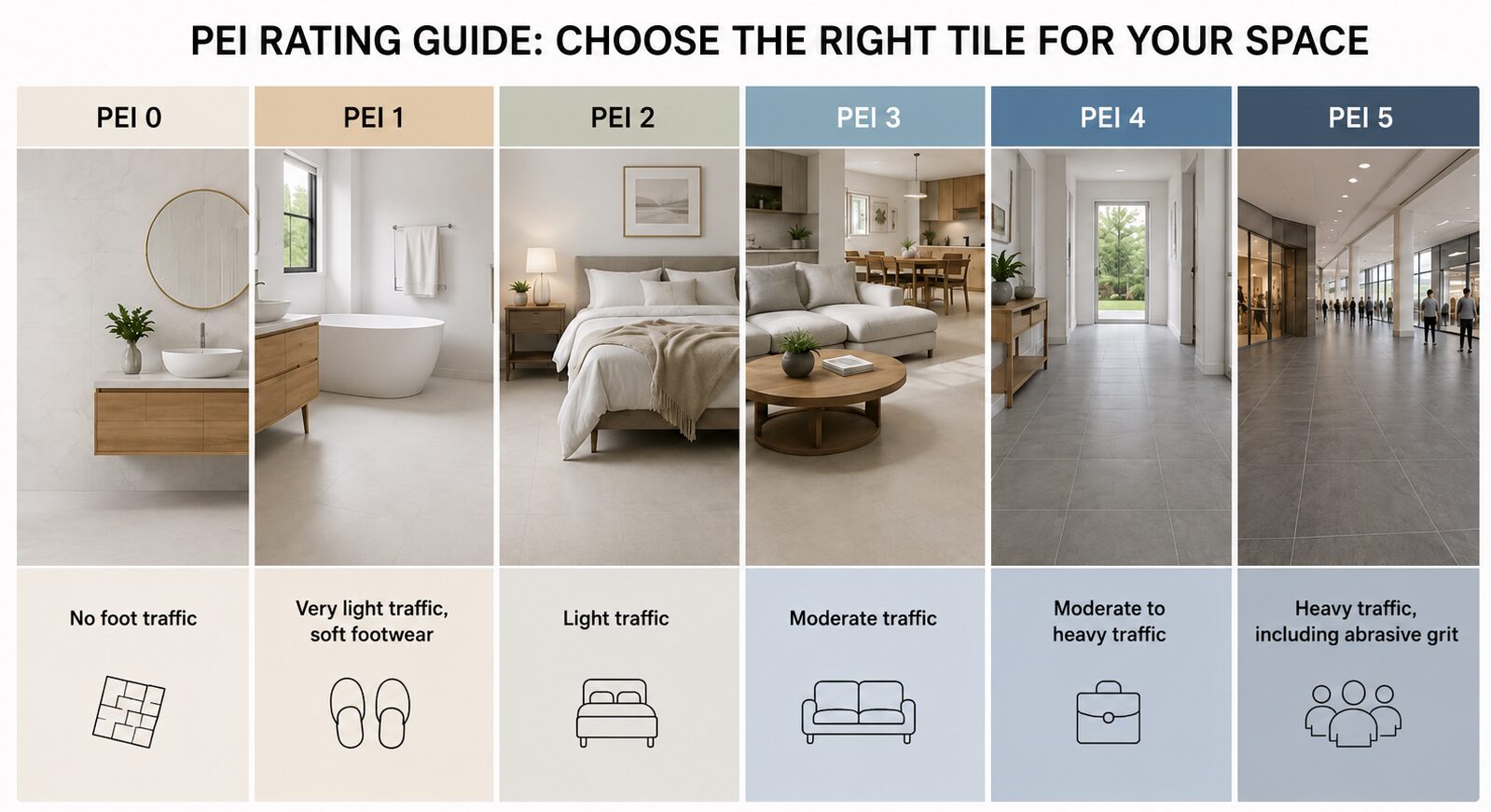
The PEI scale runs from Class 0 to Class 5, with each step reflecting greater surface wear resistance. The following classifications are based on internationally recognised testing standards such as ISO 10545-7 and should be used as general guidance only. Actual product suitability depends on project requirements, installation conditions and manufacturer specifications.
| PEI class | Surface wear resistance | Commonly considered suitable for | Example Malaysian spaces |
| Class 0 | Very low | Decorative use, walls only | Feature walls, splashbacks |
| Class 1 | Very light | Walls, or floors with barefoot or soft-sole use | Ensuite walls, powder-room features |
| Class 2 | Light | Light-traffic residential floors and walls | Bedrooms |
| Class 3 | Moderate | Most residential floors | Living rooms, dining areas, home kitchens |
| Class 4 | Heavy (residential) to light commercial | Busy homes and light commercial areas | Porches, retail lots, cafes, offices |
| Class 5 | Heavy commercial | High-traffic commercial and institutional floors | Malls, airports, F&B kitchens |
These bands are approximate and, as ISO 10545-7 itself notes, are provided for general guidance rather than as a precise specification. For most Malaysian homes, tiles in the Class 3 to Class 4 range cover nearly every floor.
How Is a Tile’s PEI Rating Tested?
A tile’s rating comes from a standardised abrasion test, most commonly run to ISO 10545-7 (or the equivalent ASTM C1027). A glazed sample is placed under a rotating load of steel balls, fine abrasive powder, and water, which is spun across the surface to mimic the grinding effect of foot traffic and grit over time. The number of revolutions the glaze withstands before visible wear appears decides its class.
The test is run in graded stages, typically at 100, 150, 600, 750, 1,500, 2,100, 6,000, and 12,000 revolutions. After each stage, the sample is cleaned and inspected under set lighting for signs of wear:
- A glaze that shows wear early sits in a lower class (walls or light use).
- A glaze that survives around 2,100 revolutions or more may reach Class 4.
- A glaze that passes beyond 12,000 revolutions may be rated Class 5.
Testing is conducted under controlled laboratory conditions using internationally recognised standards. Actual tile performance may vary depending on installation methods, maintenance practices, cleaning chemicals, environmental conditions and traffic patterns.
PEI vs the Other Durability Specs You Should Check
A PEI rating tells you about surface abrasion alone. On its own it will not tell you whether a floor is safe when wet, how much water the tile absorbs, or how well it resists a dropped pan. For a durable, safe result, the number is best read alongside a few other specifications, especially in a humid climate with plenty of wet areas.
| Rating or spec | What it measures | What it does not tell you | Why it may matter here |
| PEI rating (ISO 10545-7) | Surface abrasion of the glaze | Slip, water, strength | Busy home and retail floors |
| DCOF / COF (ANSI A137.1) | Slip resistance when wet | Surface wear | Wet bathrooms, kitchens, poolsides, rainy entrances |
| Water absorption (ISO 10545-3) | Density; sorts porcelain from ceramic | Surface wear | Wet and outdoor areas, humidity |
| Mohs hardness | Scratch resistance | Abrasion under traffic; slip | Grit tracked in from outdoors |
| Breaking strength (ISO 10545-4) | Load the tile can bear | Surface wear; slip | Large-format tiles, floors over screed |
For wet areas, slip resistance often matters as much as abrasion. A polished tile may carry a respectable rating yet still feel slick underfoot when wet, which is why we cover it separately in our anti-slip tiles ratings guide.
For best outcome, PEI ratings should be considered together with:
- Slip resistance
- Water absorption
- Breaking strength
- Installation requirements
- Intended application
- Maintenance expectations
Evaluating these specifications together provides a more complete understanding of a tile’s overall performance.
What PEI Rating Do You Need for Each Room or Space?
The recommendations below represent common industry practice for typical applications and should be used as a general reference only. Individual project requirements may differ depending on traffic levels, environmental conditions and design specifications:
| Space | Typical foot traffic | Recommended PEI | Also worth checking |
| Feature walls, Backsplash | None | 0 to 1 | Design only |
| Bedrooms | Light | 2 to 3 | Comfort |
| Bathroom floors | Light, wet | 2 to 3 | Slip (DCOF), water absorption |
| Living Room and Dining | Moderate | 3 | Design |
| Kitchen floors | Moderate to heavy | 3 to 4 | Slip, stain resistance |
| Porches and Balcony | Heavy, outdoor grit, rain | 4 to 5 | Slip, water absorption |
| Commercial Retail | Heavy commercial | 4 to 5 | Slip, maintenance |
| Shopping Mall | Very heavy | 5 | Slip, chemical resistance |
Wet and outdoor spaces deserve extra care, because rain and splashes make slip resistance a safety issue. For those areas, it helps to pair the class with a slip and water check, as we set out in our pool tiles selection guide for anti-slip and wet areas. If you are matching finishes room by room, our overview of the best tile types for each room in Malaysia works alongside this scale.
Is a Higher PEI Rating Always Better? Glazed, Unglazed, and “NR” Tiles
A higher PEI rating should not be interpreted as a higher-quality tile. Instead, it indicates that the glazed surface is generally designed to withstand greater levels of pedestrian abrasion.
Selecting a tile with a PEI rating appropriate for its intended use often provides the best balance between aesthetics, performance and cost.
For example, a Class 5 tile in a quiet bedroom is often unnecessary, while a beautiful Class 1 tile is perfectly at home on a feature wall. It is also common to see tiles marked “NR”, meaning Not Rated, and this can be misread as a weakness when it usually is not.
An NR label simply means the tile was not put through the glazed abrasion test, most often because it has no glaze to test. Unglazed through-body tiles and natural stone fall into this group. Their wear resistance is judged in other ways instead.
| Tile type | Carries a PEI rating? | How durability is judged instead | Commonly used for |
| Glazed ceramic | Yes | PEI plus water absorption | Walls, light-traffic floors |
| Glazed porcelain | Yes (often 3 to 5) | PEI plus low water absorption | Most floors, indoor and outdoor |
| Unglazed / homogeneous (through-body) | Often NR | Deep abrasion (ISO 10545-6), water absorption, breaking strength | Heavy-traffic commercial floors |
| Natural stone | No (NR) | Mohs hardness, porosity, sealing | Feature areas, specific uses |
Durable Tile Options Across Kimgres Collections
Homogeneous tiles are a good example of why “no PEI number” does not mean “not durable”. Because the colour and material run through the full body, surface wear is far less visible, which is one reason they are widely specified for demanding commercial floors.
Kimgres offers a wide range of ceramic, porcelain and homogeneous tile collections suitable for various residential and commercial applications. Depending on the collection, different technical specifications: including abrasion resistance, water absorption and slip resistance (may be available to help meet project requirements).
Always refer to the official product specification before finalising material selections.
Using PEI When Specifying Tiles for a Project
To specify tiles well, treat PEI as a filter, not the final answer. Start by matching the class to the traffic the space will see, then narrow your choice using slip resistance, water absorption, and, for larger formats, breaking strength. This layered approach tends to prevent the two most common regrets: a floor tile that dulls too soon, or a wet-area tile that looks right but feels unsafe.
A simple sequence that works on most projects:
- Match the room to a PEI class using the traffic guide above.
- Check slip resistance (DCOF) for any area that gets wet.
- Confirm water absorption for bathrooms, wet zones, and outdoor spaces.
- Verify the spec sheet, since two similar-looking tiles can carry different ratings.
Where environmental certifications are required, additional product documentation may also be relevant.
Selected Kimgres tile collections carry internationally recognised certifications, including GREENGUARD Gold, subject to the individual product series.
For detailed specifications, always consult the latest technical data sheet, discovering our sibling guide on choosing tiles with the right PEI rating for interior projects covers the decision step in more detail, or contact the Kimgres team.
Frequently Asked Questions About PEI Ratings
What does PEI stand for?
PEI stands for Porcelain Enamel Institute, the organisation that developed the abrasion rating now used across the tile industry. It measures how well a glazed tile’s surface may resist wear from foot traffic, on a scale from Class 0 to Class 5.
What PEI rating is best for a kitchen floor?
For most residential kitchens, PEI Class 3 or Class 4 is commonly considered appropriate. The final selection should also consider slip resistance, maintenance requirements and the specific tile collection.
Do porcelain tiles always have a higher PEI rating than ceramic?
Not necessarily. Both ceramic and porcelain tiles are available across different PEI classifications depending on their glaze and intended application. Always refer to the manufacturer’s published specifications rather than assuming the rating based solely on material type.
Do homogeneous or natural stone tiles have a PEI rating?
Often they do not. Unglazed through-body homogeneous tiles and natural stone are commonly marked NR, or Not Rated, because the test applies to glazed surfaces. Their durability is judged instead by measures such as deep abrasion resistance, water absorption, and hardness.
Is a PEI rating the same as slip resistance?
No. It measures surface abrasion, while slip resistance is measured separately, usually as a DCOF value. A tile can hold a high class and still be slippery when wet, so wet areas should always be checked for slip resistance as well.
What PEI rating should I use for a commercial or high-traffic space?
For high-traffic commercial floors such as malls, retail entrances, or F&B areas, tiles rated Class 4 or Class 5 are generally preferred. For unglazed or homogeneous options, deep abrasion resistance and water absorption are usually the more relevant figures to compare.
Note: Tile suitability may vary depending on project conditions, installation, and use. The guidance here is general in nature, so please confirm the right specification with the project consultant or relevant professional before purchase.
Conclusion
Understanding the PEI rating helps you select tiles that are appropriate for different levels of foot traffic, from decorative wall applications to demanding commercial environments.
While PEI provides valuable guidance on surface abrasion resistance, it should always be considered alongside other technical specifications such as slip resistance, water absorption, breaking strength and the intended application.
By evaluating these factors together, homeowners, designers and project professionals can make more informed tile selections that balance durability, aesthetics and long-term performance.
If you are comparing tile specifications or selecting materials for an upcoming project, explore the Kimgres collection or contact our team for the latest technical product information and sample availability.