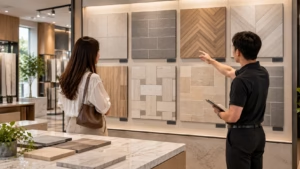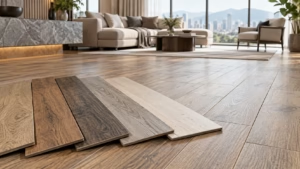
Outdoor areas in Malaysia are regularly exposed to rain, heat, humidity, and surface contaminants, so outdoor tiles are commonly reviewed for more than appearance. Porcelain floor tiles and homogeneous tiles are often considered for outdoor floors because they generally have lower water absorption and a denser body. Surface texture and slip resistance, drainage, slope, and installation are commonly reviewed for car porches, balconies, terraces, and walkways. Final tile suitability would depend on the product, the finish, the test data, and the project conditions.
Why Outdoor Tiles Need Different Considerations in Malaysia
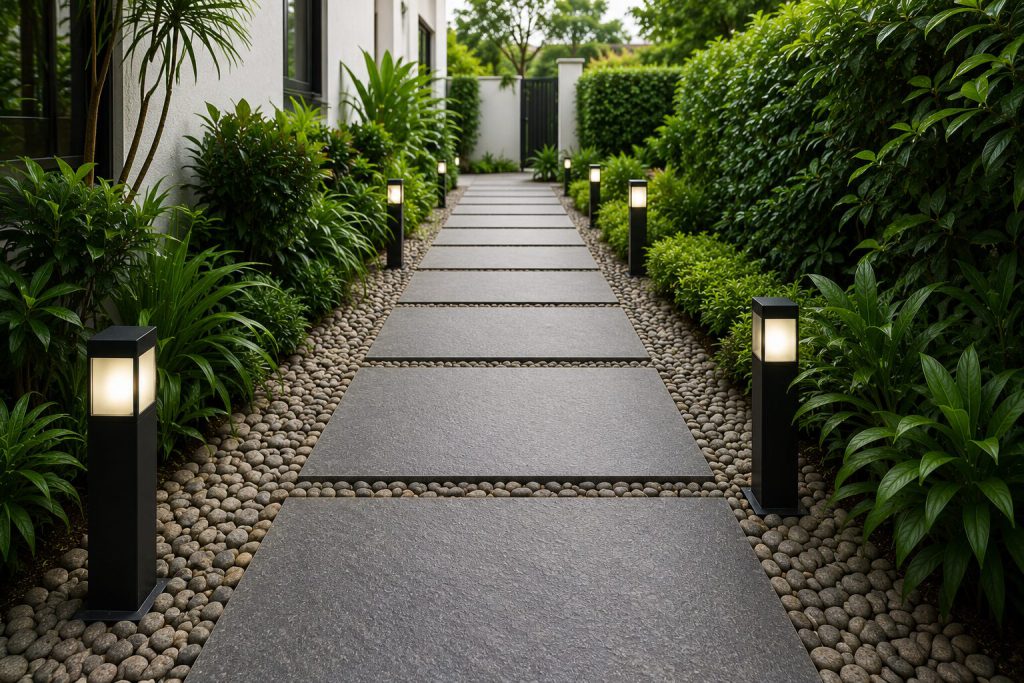
Choosing outdoor tiles in Malaysia generally involves more than selecting a design that looks good. Outdoor spaces are exposed to tropical weather, heavy rainfall, strong sunlight, and year-round humidity. Surfaces such as car porches, balconies, terraces, and garden walkways may stay wet for longer periods and may also collect dust, soil, and other contaminants.
Because of this, outdoor tile selection is commonly reviewed together with the surface finish, water absorption, slip resistance, drainage, and installation method. A tile that appears suitable in a showroom may perform differently once installed outdoors under actual site conditions. For choosing tiles by area, see the guide on choosing tiles by space, or browse the Kimgres product page.
What Conditions Do Outdoor Tiles Face?
Outdoor areas in Malaysia commonly experience a combination of demanding conditions:
- Frequent moisture from rain, splash water, and humidity, which may leave surfaces wet or damp.
- Heat and sunlight, which may affect surface temperature and, may influence the appearance of certain finishes over time.
- Surface contaminants such as dust, soil, leaves, and algae, which may affect grip and cleaning.
- Traffic from foot use and, in car porches, vehicle loads.
These conditions are part of why outdoor floor tiles are commonly selected with attention to the tile body, surface texture, and slip resistance, rather than appearance alone.
Porcelain and Homogeneous Tiles for Outdoor Areas
Porcelain tiles are commonly considered for outdoor and semi-outdoor applications because they typically have lower water absorption and a denser tile body compared with standard ceramic tiles. Homogeneous tiles, a type of full-body porcelain, are also commonly reviewed for higher-traffic outdoor areas where long-term appearance is a priority. For background, see the guides on porcelain tiles explained and types and classifications of tiles. For a direct comparison, see the porcelain vs ceramic tiles guide.
However, not every porcelain tile is automatically suitable for every outdoor area. The surface finish, product data, intended use, slope, and drainage would still be reviewed. Some tiles are specifically produced for outdoor use, and the product data sheet generally indicates whether a tile is intended for indoor, outdoor, or semi-outdoor areas.
Car Porch Floor Tiles
Car porches present a particular combination of conditions: exposure to rain and outdoor weather, plus the load and movement of vehicles. Car porch floor tiles are commonly reviewed for surface strength, slip resistance when wet, and resistance to staining from oil, tyre marks, and outdoor contaminants.
Textured, structured, or matte finishes are commonly considered for car porch floor tiles design because they may provide improved wet-area traction compared with high-gloss surfaces. The tile body and intended use are generally reviewed to confirm the product is suitable for floor and outdoor applications, and installation factors such as the substrate, adhesive, and movement joints would typically follow installation guidance.
Balconies and Terraces
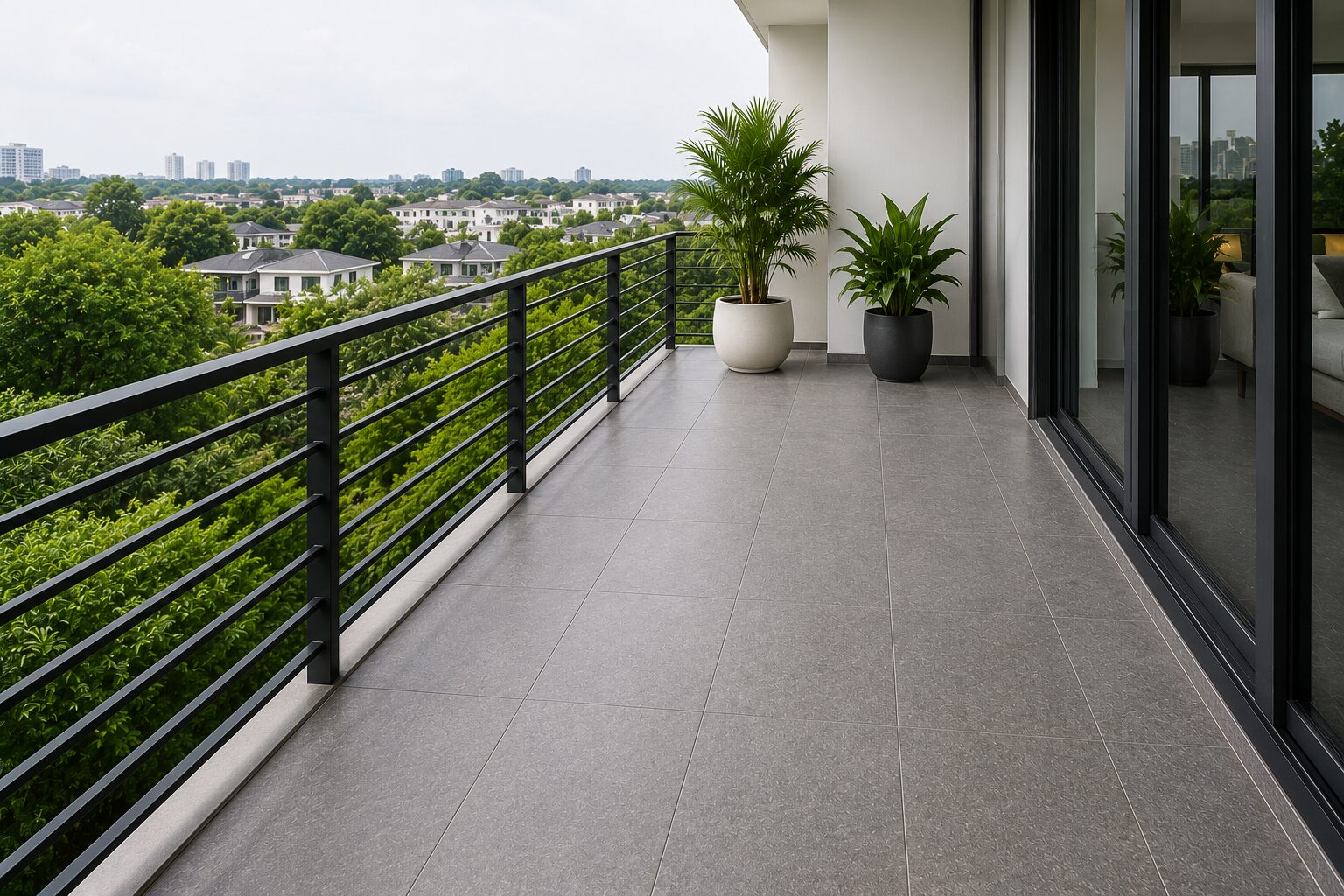
Balconies and terraces may be partly covered or fully exposed, and they often connect indoor and outdoor spaces. Because of this, tile selection commonly considers both appearance (to complement the interior) and outdoor performance (to handle rain, sun, and moisture).
Slip resistance is commonly reviewed for balconies and terraces, particularly where the surface may become wet. Drainage and a slight slope away from the building are generally part of the installation design to help manage rainwater. Where the balcony sits above an occupied space, waterproofing performance should not be assumed to come from the tiles or grout alone and is typically addressed through separate waterproofing systems.
Garden Paths and Outdoor Walkways
Garden paths and walkways may be exposed to soil, leaves, rain, and biological growth such as algae, all of which may affect grip and cleaning over time. Textured finishes and suitable slip resistance are commonly considered for these areas, alongside a maintenance routine to keep surfaces clear of contaminants.
Because walkways may be used in varied conditions, sometimes with footwear and sometimes barefoot near pools, the intended use is commonly reviewed. For barefoot wet areas, additional considerations may apply, as covered in the anti-slip tile ratings guide.
Slip Resistance and Surface Finish Outdoors
For outdoor areas that are regularly wet, surface texture and slip resistance are commonly part of the selection process. Wet slip resistance references such as Pendulum Test values (P-ratings) are widely used internationally as one method of assessing wet-area slip resistance, and textured or structured finishes are more commonly considered for outdoor floors than high-gloss surfaces.
It is worth noting that a stated rating in a brochure may not provide the full picture. Where slip resistance is a priority, it may help to request the relevant test certificate that identifies the exact product and finish. Different test methods measure different conditions, so the test data would ideally match the intended use of the area. For a full explanation, read the anti-slip tile ratings guide. For moisture-prone areas, the Land Series is one range that may be reviewed.
Drainage, Slope, and Installation Considerations
Outdoor tile performance is commonly linked to installation. Commonly reviewed points include:
- Drainage and slope: a slight fall away from buildings may help manage rainwater and minimise the likelihood of standing water.
- Suitable adhesive and grout: products intended for external conditions are commonly used.
- Movement joints: outdoor areas may experience temperature changes, so movement joints are generally reviewed.
- Substrate preparation: a stable, well-prepared base may help support installation quality and long-term performance.
For general fitting steps, see the tile installation guide, and for reducing hollow spots under tiles, the guide on solid tile installation.
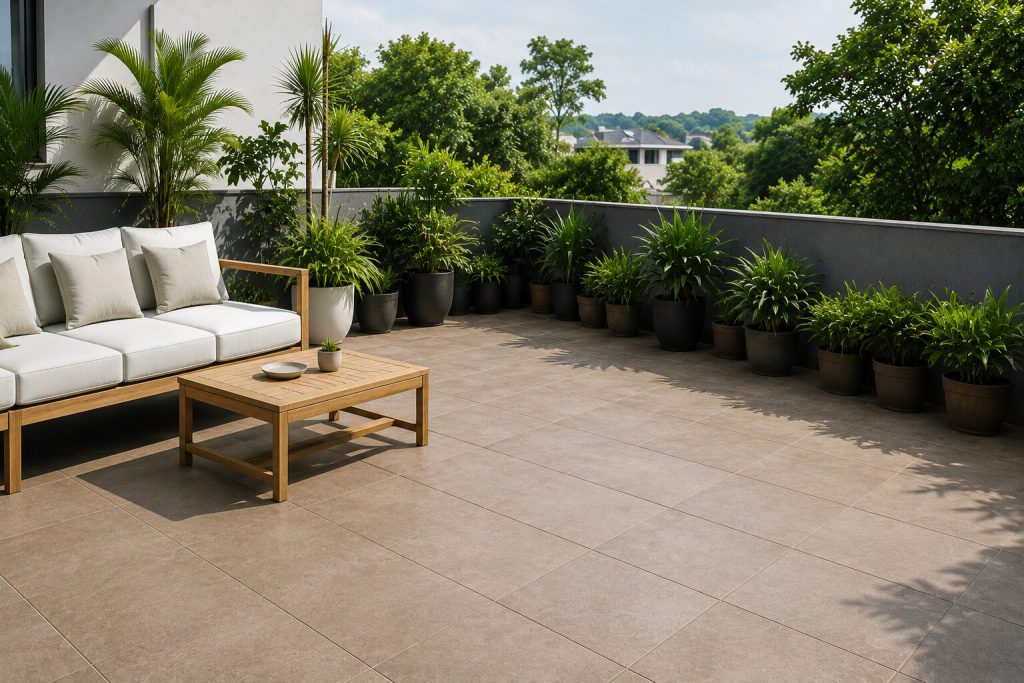
What to Check Before Buying Outdoor Tiles
- Confirm the tile is intended for floor and outdoor use on the product data sheet.
- Review water absorption, since lower-absorption tiles such as porcelain floor tiles are commonly considered for outdoor areas.
- Check the surface finish and any relevant slip resistance information for wet conditions.
- Consider the expected traffic, including vehicle loads for car porches.
- Plan for drainage, slope, suitable adhesive and grout, and movement joints; for grout choices, see the tile grout guide.
- Request supporting documents or certificates where relevant for larger projects; you may refer to the Kimgres certifications page.
Frequently Asked Questions About Outdoor Tiles
What tiles are commonly used for outdoor areas in Malaysia?
Porcelain and homogeneous tiles are commonly considered for outdoor floors because they typically have lower water absorption and a denser tile body compared with many standard ceramic tiles. Suitability would still depend on the surface finish, intended use, and product data.
What tiles are commonly used for a car porch?
Car porch floor tiles are commonly reviewed for surface strength, slip resistance when wet, and stain resistance. Textured, structured, or matte finishes are often considered because they may offer more grip than high-gloss surfaces.
Should outdoor tiles be polished or textured?
For outdoor floors that may become wet, textured or structured finishes are more commonly considered than high-gloss finishes. The surface finish would generally be reviewed together with the intended use and any available test data.
Can ceramic tiles be used outdoors?
Porcelain is more commonly considered for outdoor areas due to lower water absorption, but ceramic may suit selected lower-exposure or covered areas depending on the product, finish, and installation. The product data sheet would generally confirm whether a tile is intended for outdoor use.
Do outdoor tiles need special installation?
Outdoor installation commonly considers drainage, slope, suitable external adhesive and grout, movement joints, and substrate preparation. Working with an experienced installer and following product guidance may help support long-term performance.
Note: Tile suitability and slip resistance may vary depending on project conditions, installation methods, safety requirements, and local standards. Final selection should be confirmed with the project consultant or relevant professional.
Conclusion
Outdoor tile selection in Malaysia is generally about matching the tile to the conditions of the space. Car porches, balconies, terraces, and walkways each face rain, heat, humidity, and traffic in different ways, so the tile body, surface finish, slip resistance, drainage, and installation are commonly reviewed together.
Porcelain and homogeneous tiles are commonly considered for outdoor floors, but the final choice would depend on the product data, finish, and project requirements. To explore outdoor and high-traffic options, browse the Kimgres product page or contact Kimgres for samples and product data.
Note: Slip resistance and tile suitability may vary depending on project conditions, safety regulations, and local standards. Final selection should be confirmed with your project consultant or relevant professional.