
Pool areas are regularly exposed to water, outdoor conditions, and often barefoot traffic, so tile selection should consider more than appearance. Wet slip resistance references such as Pendulum P-ratings are commonly reviewed for pool decks, wet areas, changing rooms, and outdoor walkways. For barefoot wet areas such as swimming pools, spas, and showers, additional barefoot slip resistance classifications may apply. Porcelain tiles are commonly considered for pool-related areas due to lower water absorption, but final selection should depend on the product, finish, test data, installation, and project requirements.
Why Are Pool Tiles Important in Malaysia?
Choosing pool tiles in Malaysia involves more than selecting a design that looks good. Pool areas are regularly exposed to water, outdoor conditions, humidity, cleaning routines, and frequent movement. In many cases, users may also walk barefoot, which makes surface texture and slip resistance important considerations.
As highlighted in the guide on safety and anti-slip tiles, Malaysia’s tropical weather, heavy rain, and high humidity may create additional challenges for wet and outdoor flooring. Around pool areas, this may be further affected by splash water, drainage conditions, and surfaces that stay damp for longer periods.
Pool areas are also used differently from normal indoor floors. Users may move between wet and dry zones, walk barefoot, carry towels or personal items, or use the space after swimming. In residential projects, the pool area may be used by families, children, older adults, and guests. In hotels, condominiums, resorts, and clubhouses, pool decks may experience heavier foot traffic and longer daily usage.
Because of this, pool tile selection should be reviewed together with the pool layout, drainage, slope, surface finish, water absorption, installation quality, cleaning method, and long-term maintenance. A tile that looks suitable in a showroom may perform differently depending on installation and site conditions.
To explore across different tile categories, browse the Kimgres product page,
What Areas Around a Pool Need Different Tile Considerations?
A pool facility is not just one surface. Different areas around the pool may experience different levels of water exposure, foot traffic, barefoot use, cleaning products, and outdoor conditions.
For this reason, using one tile type across every pool-related area may not always be suitable. A zone-by-zone approach may help project teams choose tiles more carefully.
Main Pool Deck
The main pool deck is usually exposed to frequent water, wet feet, and regular movement. This area often requires careful consideration of surface texture, slip resistance, drainage, and long-term maintenance.
For barefoot wet areas such as pool decks, additional barefoot slip resistance classifications may apply depending on the project and applicable standard. The surface is typically reviewed for comfort in barefoot use while still offering suitable grip when wet.
Pool Steps and Entry Points
Pool steps and entry points involve a change in level. When these areas are wet, surface grip and visibility become especially important. The selected tile should be reviewed together with the step design, edge detail, lighting, and installation method.
Covered Walkways and Access Paths
Covered walkways near pools may not always be directly exposed to pool water, but they can still become wet from rain, splash water, or moisture carried from the pool deck.
These areas may be used differently from the main pool deck. Tile selection should consider whether the area is mainly barefoot, used with footwear, exposed to rain, or affected by tracked water from the pool.
Spa and Hot Tub Surrounds
Spa and hot tub areas are often wet and may also involve soap, treatment products, or cleaning chemicals. These factors can affect surface friction and maintenance needs.
Because spa and hot tub areas often involve barefoot traffic, additional barefoot slip resistance classifications may apply. The surface should also be reviewed for comfort, cleaning requirements, and compatibility with the overall design.
Changing Rooms and Shower Areas
Changing rooms and shower areas are indoor wet zones that often involve water, soap, shampoo, and barefoot traffic. Tile selection should consider surface finish, drainage, cleaning routines, and expected usage.
In these areas, the tile should also be reviewed together with grout selection, ventilation, and maintenance because moisture may remain on the surface for long periods.
For moisture-prone spaces such as poolsides and bathrooms, the Land Series porcelain tiles may be reviewed as part of the selection process.
What Anti-Slip References Should You Check for Pool Tiles?
Anti-slip references can help provide a clearer starting point when comparing pool tiles, but they should not be treated as a fixed rule for every project. Different pool areas may have different levels of water exposure, barefoot use, drainage, cleaning routines, user profiles, and design requirements.
For pool and wet-area tile selection, project teams commonly review wet slip resistance data, product surface finish, and whether barefoot slip resistance classifications are relevant to the space.
The Wet Pendulum Test is widely used internationally as a reference for wet slip resistance assessment under wet conditions. It is often reviewed for bathrooms, entrances, outdoor walkways, pool surrounds, changing rooms, and other moisture-prone areas.
For barefoot wet areas such as swimming pools, spas, showers, and similar environments, additional barefoot slip resistance classifications may apply depending on the applicable standard and project requirements.
For a full explanation of wet-zone slip resistance, read the anti-slip tile ratings guide.
Note: Tile selection and performance may vary depending on project conditions, installation methods, safety requirements, and local standards. Final specifications should be confirmed with the project consultant or relevant professional.
Are Porcelain Pool Tiles Better Than Ceramic Tiles?
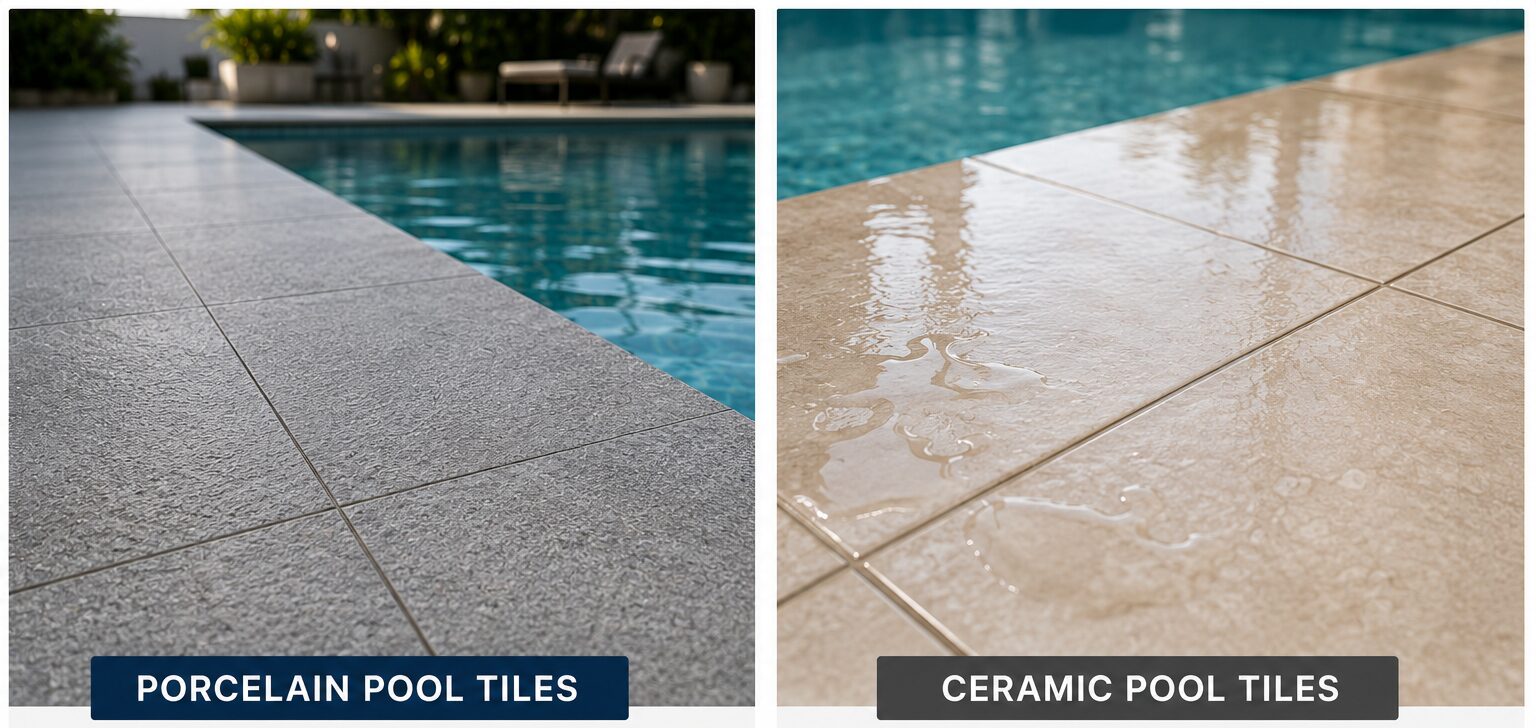
Porcelain tiles are often used for pool-related areas because they typically have a denser body and lower water absorption compared with standard ceramic tiles.
In pool environments, lower water absorption can be helpful because tiles may be exposed to repeated wetting, drying, cleaning, and outdoor conditions. Lower absorption may help reduce the risk of moisture-related issues such as staining or biological growth over time. However, actual performance depends on the specific product, surface finish, installation method, grout, adhesive, cleaning routine, and overall site condition.
Why Lower Water Absorption Matters
For pool areas, lower water absorption may support several practical benefits.
Better moisture resistance
Tiles with lower absorption are generally less likely to retain water within the tile body. This can be useful for pool surrounds, changing areas, and outdoor flooring that is exposed to moisture frequently.
Improved durability in wet areas
Dense tile bodies are commonly considered for outdoor, wet, and higher-traffic applications. They may help support long-term performance when paired with suitable installation and maintenance.
Reduced moisture retention
In humid environments, lower moisture retention may help reduce conditions where algae or moss can develop. This does not replace proper cleaning, but it can be one of several factors in long-term surface management.
Longer serviceability with proper care
A suitable tile, properly installed and maintained, may perform well over time in pool-related environments. This is especially relevant for commercial or hospitality spaces where tile replacement can affect operations.
Ceramic tiles may still be suitable for selected areas, especially where exposure is lower and the product is specifically designed for the intended use. Project teams should review the product data sheet, water absorption value, finish, and relevant certificates before final selection. For related outdoor and high-traffic tile considerations, you can also read the homogeneous tiles Malaysia guide.
What Tile Finishes Should You Be Careful With Around Pools?
Polished or High-Gloss Finishes
Polished or high-gloss tiles may become more slippery when wet. For horizontal pool-level surfaces, textured, structured, or matte finishes are more commonly considered.
This is especially relevant for areas such as pool decks, steps, changing rooms, and shower areas where users may be barefoot.
Brochure Ratings Without Supporting Documents
A stated rating in a brochure may not provide enough information for project review. Where slip resistance is important, it is useful to request the relevant test certificate or report that identifies the specific product and surface finish.
Different testing methods measure different conditions, so the test data should match the intended use of the area as closely as possible. Barefoot wet areas may also need additional classification review.
Wall Tiles Used on Floor Areas
Wall tiles and floor tiles are generally designed for different use conditions. Floor areas around pools usually require greater consideration of tile strength, surface texture, water exposure, and slip resistance.
Using the correct product type for the correct area can help support installation quality and long-term performance.
One Tile for Every Pool Zone
The main pool deck, changing room, access walkway, and café area may not need the same tile specification. A zone-by-zone approach can help create a more suitable tile selection.
For more on how surface texture supports wet-area tile selection, refer to the Slip-Shield technology guide.
What Should You Check Before Buying Pool Tiles?
Before selecting pool tiles, it is helpful to review the product from several angles: surface finish, wet slip resistance, water absorption, supplier documentation, and installation requirements.
Use the checklist below as a general guide.
Slip Resistance and Surface Finish
- Review wet slip resistance data where water exposure is relevant
- Check whether barefoot slip resistance classifications are required for barefoot wet areas
- Confirm the surface finish is suitable for wet use
- Check whether the selected finish matches the tested finish
- Avoid relying only on brochure descriptions
Product and Material Details
- Check whether the tile is ceramic or porcelain
- Review the water absorption value
- Confirm the product is intended for floor use where applicable
- Review the product data sheet
- Consider whether the tile is suitable for the expected traffic and usage level
Supplier and Documentation
- Request relevant test certificates or product documents
- Check certificate validity where applicable
- Confirm the certificate or test report identifies the product clearly
- Ask for current documentation for tender or project submission
- Discuss batch consistency for larger orders
Installation and Maintenance
- Use suitable adhesive and grout for wet or outdoor conditions
- Allow for wastage and replacement quantities where needed
- Confirm cleaning and maintenance instructions
- Avoid harsh cleaning methods that may damage the surface
- Review drainage, slope, and water management during installation
For larger projects, supporting documents such as product data sheets and certificates may be useful during selection. Project teams may also review the Kimgres certifications page before requesting current documents for tender or project submission.
What Is Kimgres Slip-Shield for Pool and Wet Areas?
One challenge in pool tile selection is balancing slip resistance with visual appearance. Heavy surface textures may provide stronger grip, but they may create a different visual appearance that may not suit hospitality, residential, or commercial spaces.
Kimgres Slip-Shield is positioned as a solution that balances slip resistance with design appeal. It uses a micro-textured surface designed to enhance surface grip characteristics under certain conditions in wet or moisture-prone areas while maintaining the intended visual appearance
The Land Series, which incorporates Slip-Shield, is intended for moisture-prone areas such as poolsides and bathrooms, and may be considered for residential or commercial environments depending on project requirements. For product options, explore the Land Series porcelain tiles.
Frequently Asked Questions About Pool Tiles in Malaysia
What slip resistance reference is commonly reviewed for pool tiles in Malaysia?
For pool surrounds and steps, wet slip resistance data is commonly reviewed because these areas are frequently exposed to water and may involve barefoot traffic. For barefoot wet areas, additional barefoot slip resistance classifications may also apply depending on the project and applicable standard.
Can ceramic tiles be used for a pool surround?
Porcelain is commonly considered for pool surrounds because it usually has lower water absorption and a denser body than standard ceramic tiles depending on the specific product specifications. Ceramic may still suit selected lower-exposure areas, depending on the product, finish, water absorption value, slip resistance data, and installation requirements.
Should pool tiles be polished or textured?
For horizontal pool-level surfaces, textured, structured, or matte finishes are more commonly considered. Polished or high-gloss finishes may become more slippery when wet, so the surface finish should be reviewed together with the tile’s intended use and relevant test data.
Are pool tiles and bathroom tiles interchangeable?
Not always. Bathrooms and pool areas both involve water, but pool environments often include continuous wet exposure, outdoor conditions, barefoot traffic, and higher usage levels. Pool areas should be reviewed separately instead of assuming a bathroom tile will necessarily suit a pool deck.
How do I verify a pool tile’s slip resistance information?
Request the relevant slip resistance test report or certificate from the supplier or manufacturer. Check whether it identifies the exact tile, surface finish, test method, testing body, and certificate validity where applicable. For barefoot pool areas, also check whether barefoot slip resistance classification is relevant to the project.
Conclusion
Pool tile selection in Malaysia should consider factors beyond appearance. Water exposure, barefoot use, surface finish, drainage, maintenance, tile body, and slip resistance information all play a role in product selection.
As a general guide, pool decks, steps, spas, showers, and changing areas should be reviewed carefully because they are often exposed to water and barefoot use. For barefoot wet areas, additional barefoot slip resistance classifications may apply depending on project requirements.
For project specifications, samples where available, or supporting documents, speak to the Kimgres team through the contact page.